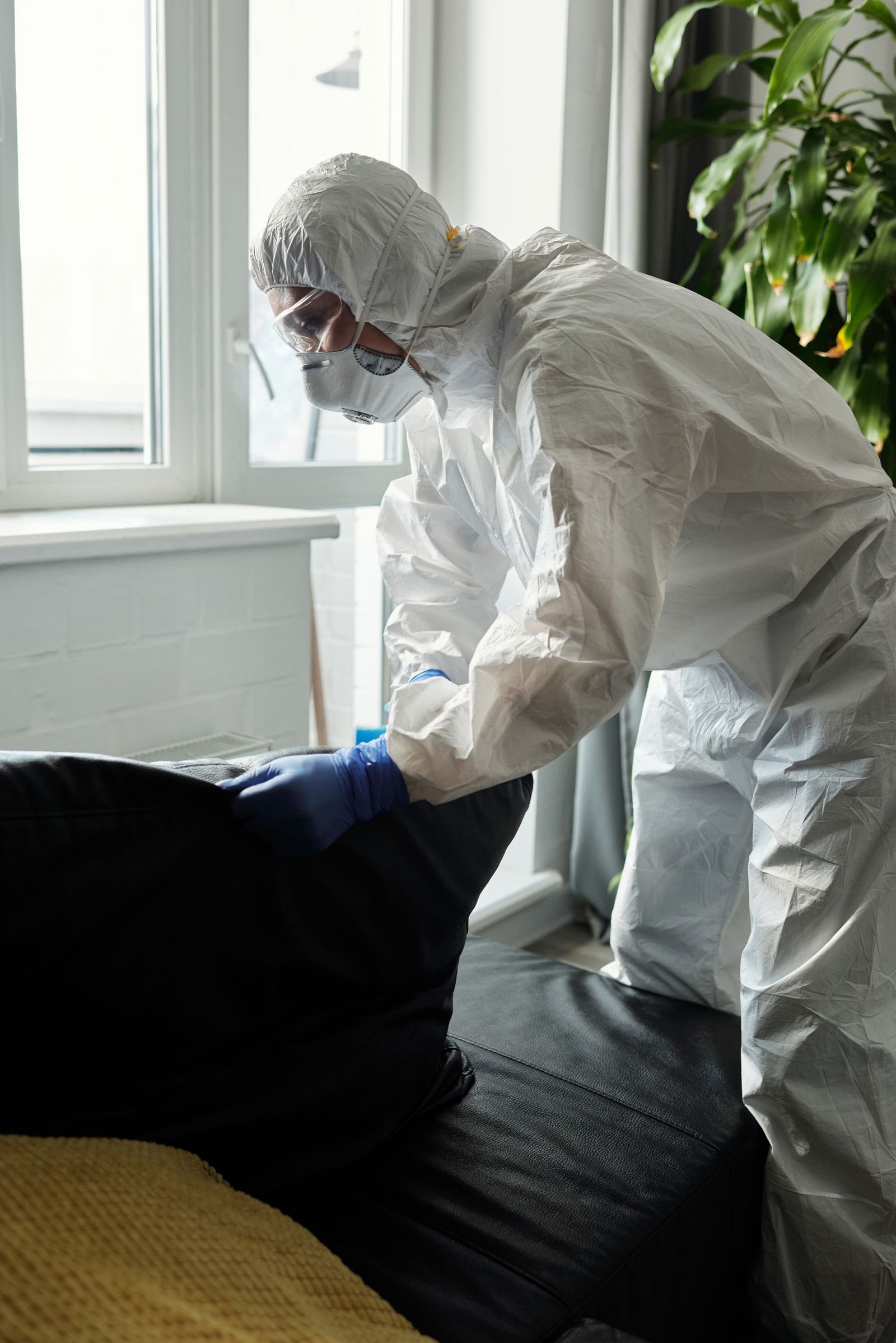
Why decontamination is a distinct, certified step
Extraction removes standing sewage, but pathogens — bacteria like E. coli, viruses, and parasites — remain on hard surfaces, in porous materials, and in the air until proper disinfection occurs. Decontamination is the phase that actually neutralizes what extraction leaves behind.
What certified decontamination involves
EPA-registered, hospital/biohazard-grade disinfectants — not consumer-grade cleaners — PPE for technicians (respirators, gloves, protective suits), proper containment to prevent cross-contamination to unaffected areas, and correct disposal of contaminated materials as biohazard waste.
What to do in the first hour
Avoid contact with any surface that touched sewage until it’s professionally assessed. Don’t attempt to disinfect with household bleach alone — it isn’t rated for full pathogen neutralization on porous or absorbed contamination. Keep the area contained. Call immediately.
Why DIY is dangerous
Direct pathogen exposure risk without PPE, incomplete neutralization leaving hidden contamination behind walls or under flooring, and disposal of contaminated material through regular household trash is unsafe and often against local waste guidelines.
Our biohazard decontamination process
Assessment of contamination extent, containment, application of certified disinfectants to all affected surfaces, disposal of contaminated materials per biohazard protocol, verification and clearance before restoration work resumes, and documentation for your insurance claim.
Discreet, professional service
Response is handled professionally and discreetly. To be clear about scope: this is biohazard-level decontamination protocol applied specifically to sewage and black water contamination — we do not provide crime scene, trauma, or decomposition cleanup services.
Insurance claim assistance
Decontamination costs following a documented sewage event are typically part of the same claim as extraction. We document thoroughly; we don’t provide legal or insurance advice.